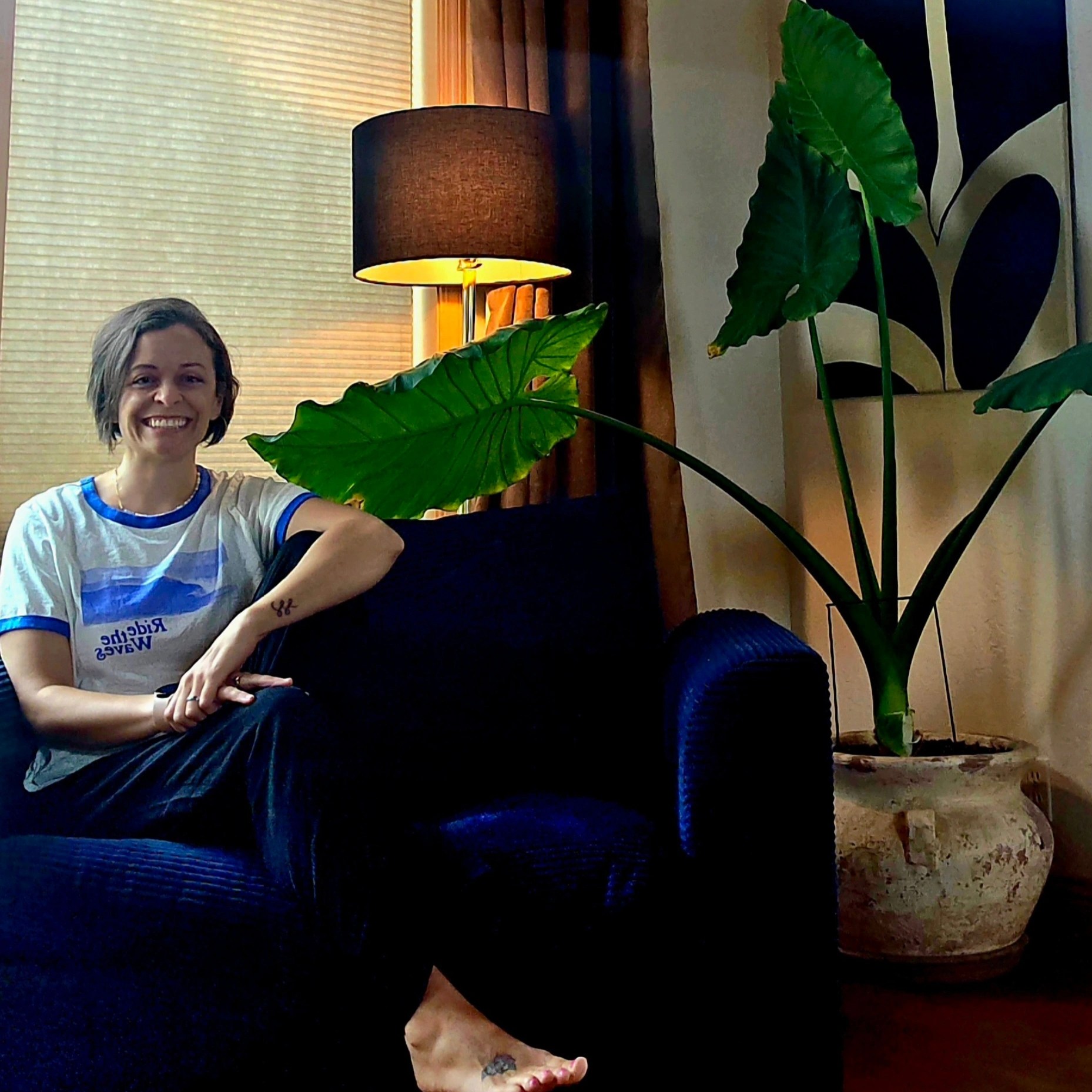
For a long time, I thought of myself only as a mom.
Our life was different than what I had imagined before having children, but I still understood it through the same lens most parents do-busy days, constant needs, exhaustion, love. I didn’t yet have language for what was actually happening.
That changed when my kids were around eight and seven.
It became clear that I couldn’t take a job outside our home-not because I didn’t want to, but because our life required something else from me. My daughter needed constant protective supervision. Not supervision in the casual sense, but the kind that exists for safety. For survival.
When that reality was formally recognized and validated through IHSS, I was given a choice:
I could hire someone else to do that work, or I could take that role on myself.
It was in that moment that I realized something I hadn’t fully named before.
Other parents weren’t standing at this crossroads.
I felt gratitude-deeply-for living in California, where caregiving like this is acknowledged and supported by the state. There was relief in knowing the work I was already doing had a name, that it mattered enough to be recognized.
And at the same time, there was grief.
Because that recognition also meant my options were gone.
This wasn’t a role I could step in and out of. My daughter needed supervision around the clock. She needed help with feeding, bathing, and daily care. She needed monitoring for seizures. She needed someone whose attention didn’t drift, whose body stayed alert even when exhausted.
She needed me.
Not long after, my understanding of caregiving expanded again.
As my son grew older, we watched him move deeper into burnout. What we once thought were behavioral struggles revealed themselves as something else entirely. We began to understand his nervous system differently. We learned about autism with a PDA profile, and suddenly so much of his experience made sense.
His needs were different from his sister’s-but they were no less real.
He required support, accommodation, and regulation in ways that went far beyond typical parenting. And once again, IHSS recognized that what we were living wasn’t just “hard parenting.” It was caregiving.
I remember the moment it landed fully in my body.
I wasn’t just a caregiver now.
I was a caregiver for both of my children.
That was the day I understood that I wasn’t only a mom anymore.
Those two roles live in the same body, but they carry different weight. Motherhood is expansive and relational. Caregiving is logistical, protective, constant. One is often seen. The other is largely invisible.
I didn’t stop being their mother when I stepped into caregiving-but something shifted. The future I had loosely imagined narrowed. Not in love, but in choice.
This isn’t a story about resentment or regret. It’s about naming what changed. About understanding that many of us arrive here quietly, without ceremony, and without language for what we’ve become.
I’m still their mom. Always.
But I’m also their caregiver.
And holding both has reshaped my life in ways I’m still learning how to understand.
Categories
The Day Motherhood Became Caregiving

 The Mom And The Caregiver