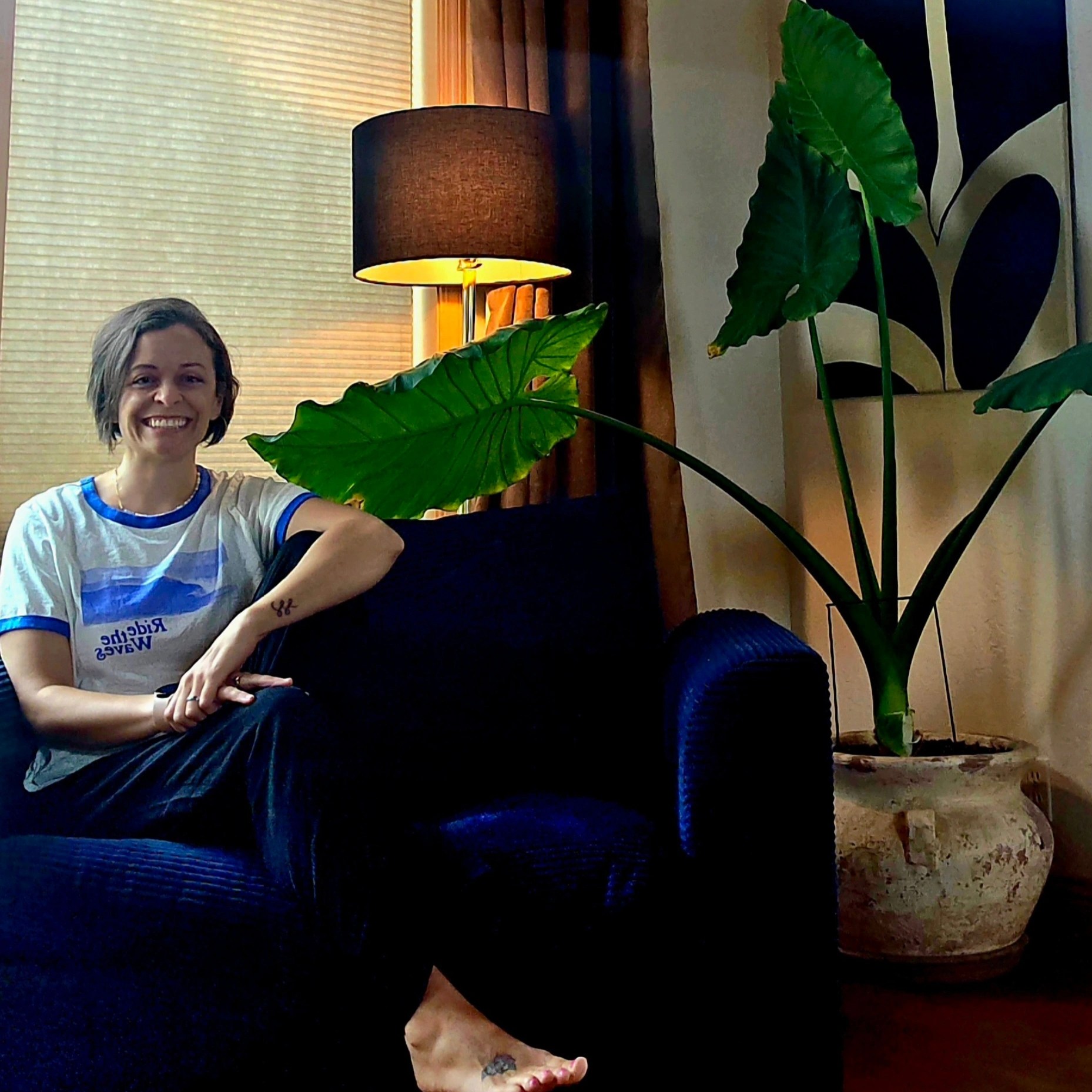
If you had asked me a few years ago what our days “should” look like…
I would have had a very different answer.
Structured mornings.
On-time school drop-offs.
After school routines.
Homework done.
Dinner.
Bedtime.
Everything in its place.
Everything making sense from the outside.
But what I’ve learned is…
Just because something looks right from the outside, doesn’t mean it feels right on the inside.
And for us, it wasn’t working.
Not for my kids.
Not for me.
Not for our home.
Now, our days look different.
And honestly… they feel different too.
With Laney, school is flexible.
When she’s ready-if she’s ready-I take her.
Some days that’s on time.
Some days it’s late.
Some days, it doesn’t happen at all.
And instead of forcing it, I listen.
If she’s had a hard night, a rough morning, or I can feel that her nervous system is already overwhelmed…
I adjust.
She also knows something that has changed everything for her:
I will come get her at any time.
No questions. No pressure.
I stay in communication with her teacher, and I’m always ready.
So if the day becomes too much, I pick her up before she’s pushed past her limit.
And the truth is…
That means I don’t get a lot of free time.
But I’ve made peace with that.
Because I will take a well-rested, regulated child over a full school day that ends in complete dysregulation… every single time.
With Lino, we’ve created something entirely different.
He homeschools-because he wants to.
And our days are intentionally flexible.
There’s no rigid schedule.
No forced structure.
He eats when he’s hungry.
I provide healthy options, but he has autonomy in what he chooses.
Because I’ve learned that listening to his body matters more than controlling it.
We’ve also created screen time boundaries together.
Not something I forced.
Something we collaborated on.
I shared what I felt was healthy, and he shared what felt manageable.
And we met in the middle.
From there, the day unfolds based on what we have capacity for.
Something active.
Something engaging.
Something educational.
But it’s not forced.
It’s not scheduled.
It’s dependent on how regulated we feel.
There was a time I thought we had to go to the park.
Had to stay for a certain amount of time.
Had to be outside.
Had to be doing something.
And almost every time…
It ended in frustration.
For them.
For me.
I would leave feeling discouraged.
Comparing myself to other moms who seemed like they were doing it all “right.”
It was exhausting.
Now, I don’t measure our days like that anymore.
Now I ask:
Are we regulated?
Are we connected?
Do we feel at peace?
And if the answer is yes…
That’s enough.
Because when I let go of expectations…
When I stopped trying to match what everyone else was doing…
I was finally able to see what my kids actually needed.
And from that place, I can make decisions differently.
Not based on pressure.
Not based on judgment.
Not based on fear of the future.
But based on what supports their nervous system…
Right now.
And what I’ve found is this:
When we prioritize regulation, everything else starts to fall into place.
Sleep improves.
Connection deepens.
Learning happens naturally.
Our home feels calmer.
But one of the biggest shifts… has been in me.
For the first time, my time alone actually feels like time alone.
I can lock my door, put in my earbuds, go for a walk…
And my mind isn’t racing.
It’s not replaying the chaos.
It’s not bracing for the next hard moment.
It’s calm.
It’s present.
I can actually enjoy those moments.
And that’s something I didn’t realize I had been missing for so long.
Because when everything felt dysregulated, even the quiet moments weren’t really quiet.
My body was still holding it all.
Now… it’s different.
There’s more peace.
More presence.
More space to just be.
And that might be the biggest takeaway of all.
We’re not just helping our kids.
We’re all benefiting from this work.
It’s not perfect.
It’s not always easy.
But it’s aligned.
And I would choose this…
Over the constant stress, pushing, and overwhelm we used to live in…
Every single time. 🤍





 The Mom And The Caregiver