Categories
Neurodiverse Motherhood

Acceptance Isn’t Denial: Why Love, Labels, and Honesty All Matter

Acceptance Isn’t Denial


I love my children exactly as they are.
I accept their neurodivergence.
I don’t want to change who they are.
But acceptance does not erase pain.
And it does not mean life is easy.
Loving our children deeply and accepting them fully can exist alongside the reality that their bodies, brains, and nervous systems work harder every single day. Acceptance isn’t denial of struggle – it’s the decision to face it honestly, with love.


The Medical Reality People Don’t See


My children live with medical and neurological conditions that affect how their bodies function: muscle tone, balance, endurance, digestion, regulation, and safety awareness. These aren’t behaviors. They aren’t choices. They are physical realities.
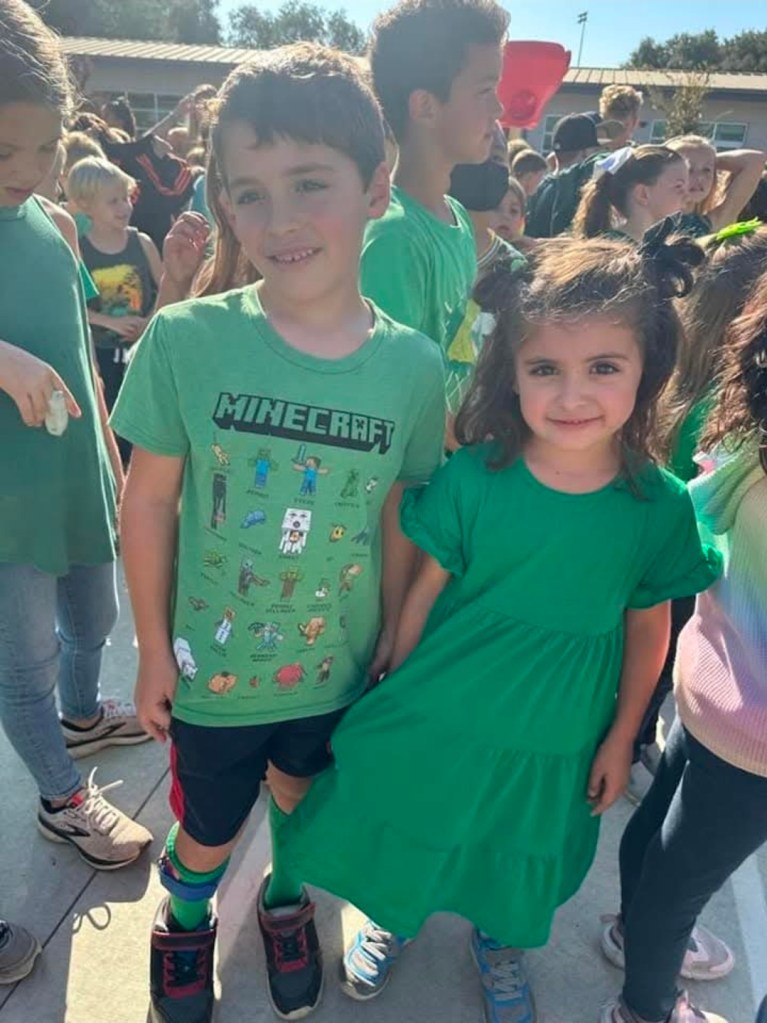
I slow my pace when crossing the street so my son can walk safely without being pressured to move faster than his body allows. Walking too quickly could cause him to trip over a dropped foot. Cars have to wait longer for us to cross. From the outside, it may look like I’m a capable parent simply choosing not to hurry my children along.
What’s actually happening is that my children cannot walk fast -and I choose to slow down so they don’t feel alone, rushed, or ashamed for something they can’t control.
We park close to buildings whenever possible, not out of convenience, but out of necessity. Walking long distances drains energy they need just to participate – to attend school, explore the zoo, enjoy the playground. They don’t need to waste precious energy hurrying across a crosswalk for an impatient driver.
And then there are the moments that hurt in quieter ways.
Watching a group of kids run toward the playground, racing to be first to the swings – while knowing my child wants that swing just as badly but doesn’t have the physical ability to get there fast enough. Seeing him play tag and always be “it,” not because he’s slower to react, but because his body can’t move quickly enough to escape. He never gets to be the fast one. The agile one. The one who wins.
It stings.
I’ve watched peers finish an activity and run off toward the next adventure while my child carefully climbs down, focused on not falling, sometimes sitting alone – maybe wondering why everyone left, maybe needing help putting on a brace or shoes just to move on. By the time he’s ready, the group has already moved ahead, laughing and planning what’s next.
No amount of calling out “Wait!” helps when others don’t understand.
These are the quiet struggles our kids live with – and the ones we carry with them.


Safety, Vigilance, and Judgment


There’s also the constant layer of safety.
I’ve received glares from drivers when my child slips out of my grasp and attempts to walk right in front of a car -the look that says I’m irresponsible, that I haven’t “taught” my child street safety.
What they don’t know is that my child isn’t capable of reliably learning that risk.
Yes, it’s my job to protect her.
And when you’re required to be alert for every possible danger, it is inevitable that at some point, your child will slip away.
I remember one moment vividly. I gave my daughter space at the playground so she could socialize and play more independently. When it was time to leave and I motioned for her to come to me, she sensed my fear – and ran in the opposite direction.
I dropped everything and ran after her. She made it to the gate that opened into a parking lot packed with cars picking up children. She stopped at the edge of the sidewalk, looked back at me, and I yelled “STOP.”
She stopped.
It worked – but only after months of therapy, repetition, and teaching. She was eight years old when it finally clicked. Even then, it was still unpredictable and unreliable. I knew the risk every single time.
This is the vigilance families live with – often unseen, often misunderstood.


Why Medical Labels Matter


For years, I wondered if my child’s struggles were simply “behaviors” – things that could be fixed, trained, or corrected. Professionals would say, “Have you tried this?” or “You just need to do that,” assuming I hadn’t already tried everything – over and over and over – with little progress.
The judgment was heavy.
What would have helped was someone saying:
“Some kids learn at different speeds.”
“Some skills may take a long time – or may never come.”
“Your job is to keep trying, but not to carry the weight of blame.”
Before diagnoses, our children were seen as out of control.
And parents were seen as not doing enough.
After diagnoses – autism, neurological and genetic conditions – something shifted. People said, “Oh.”
They’d seen this before.
It made sense.
That nod of acknowledgment mattered.
Labels don’t limit our children.
They give context to what others can’t see.
Without them, there is blame.
With them, there is understanding – or at least a pause before judgment.


Acceptance Is Not the Same as Understanding


Most people will say they love disabled people and support special needs families – and I believe them. Most people want to be neuro-affirming.
But supporting something doesn’t mean fully understanding it.
If you aren’t disabled, or raising a disabled child, you may never truly understand the weight of this life – and that’s okay.
What’s hard is when people pretend to understand. When they offer advice for situations they aren’t living. When “I get it” replaces listening.
What helps is honesty.
“I don’t fully understand.”
“I can’t imagine how hard that is.”
“That sounds heavy.”
“I’m here.”
That kind of humility builds trust.
Only families living this life truly understand it – and that’s okay. We don’t need everyone to get it. We need people to believe us without fixing us. To support without advising. To create environments that don’t demand sameness.


What Actually Helps Families


What helps isn’t perfection or expertise.
It’s presence.
Admitting you don’t fully understand
Believing parents as the experts on their children
Making space instead of offering solutions
Creating environments that allow differences without punishment
That is what safety looks like for families like ours.


Holding All Truths at Once


Love and suffering can coexist.
Acceptance and reality can coexist.
Neurodiversity and disability can coexist.
Support grows where honesty lives.
And when we tell the whole truth – gently, clearly, without fear – we make space for understanding that actually helps.

Categories
Neurodiverse Motherhood

The Day Motherhood Became Caregiving


For a long time, I thought of myself only as a mom.
Our life was different than what I had imagined before having children, but I still understood it through the same lens most parents do-busy days, constant needs, exhaustion, love. I didn’t yet have language for what was actually happening.
That changed when my kids were around eight and seven.
It became clear that I couldn’t take a job outside our home-not because I didn’t want to, but because our life required something else from me. My daughter needed constant protective supervision. Not supervision in the casual sense, but the kind that exists for safety. For survival.
When that reality was formally recognized and validated through IHSS, I was given a choice:
I could hire someone else to do that work, or I could take that role on myself.
It was in that moment that I realized something I hadn’t fully named before.
Other parents weren’t standing at this crossroads.
I felt gratitude-deeply-for living in California, where caregiving like this is acknowledged and supported by the state. There was relief in knowing the work I was already doing had a name, that it mattered enough to be recognized.
And at the same time, there was grief.
Because that recognition also meant my options were gone.
This wasn’t a role I could step in and out of. My daughter needed supervision around the clock. She needed help with feeding, bathing, and daily care. She needed monitoring for seizures. She needed someone whose attention didn’t drift, whose body stayed alert even when exhausted.
She needed me.
Not long after, my understanding of caregiving expanded again.
As my son grew older, we watched him move deeper into burnout. What we once thought were behavioral struggles revealed themselves as something else entirely. We began to understand his nervous system differently. We learned about autism with a PDA profile, and suddenly so much of his experience made sense.
His needs were different from his sister’s-but they were no less real.
He required support, accommodation, and regulation in ways that went far beyond typical parenting. And once again, IHSS recognized that what we were living wasn’t just “hard parenting.” It was caregiving.
I remember the moment it landed fully in my body.
I wasn’t just a caregiver now.
I was a caregiver for both of my children.
That was the day I understood that I wasn’t only a mom anymore.
Those two roles live in the same body, but they carry different weight. Motherhood is expansive and relational. Caregiving is logistical, protective, constant. One is often seen. The other is largely invisible.
I didn’t stop being their mother when I stepped into caregiving-but something shifted. The future I had loosely imagined narrowed. Not in love, but in choice.
This isn’t a story about resentment or regret. It’s about naming what changed. About understanding that many of us arrive here quietly, without ceremony, and without language for what we’ve become.
I’m still their mom. Always.
But I’m also their caregiver.
And holding both has reshaped my life in ways I’m still learning how to understand.

Categories
Neurodiverse Motherhood

Why I’m writing here.

I’ve shared pieces of our life online before, mostly in small moments. A caption here. A story there. But there are parts of this life that don’t fit well in short form.This space exists for those parts.I’m a mom to neurodiverse children with complex needs. Some of our communication happens beyond spoken words. Much of our parenting happens outside the expectations people carry about what motherhood is supposed to look like.I’m writing here to slow things down.To give context to moments that are often misunderstood. To talk about caregiving without turning it into inspiration or tragedy. To name the quiet grief, the regulation work, the invisible labor, and the deep love that all exist at the same time.This won’t be a how-to space. I’m not here to offer advice that fits everyone. I’m here to tell the truth as we live it, with care and intention.Some posts will be short. Some will be heavy. Some will simply be observations from an ordinary day that isn’t actually ordinary.If you’re parenting in a similar space-or trying to understand someone who is-this place is for you.And if you’re new to this world, welcome.